Field note
Trout Water: Fishing Holly Creek
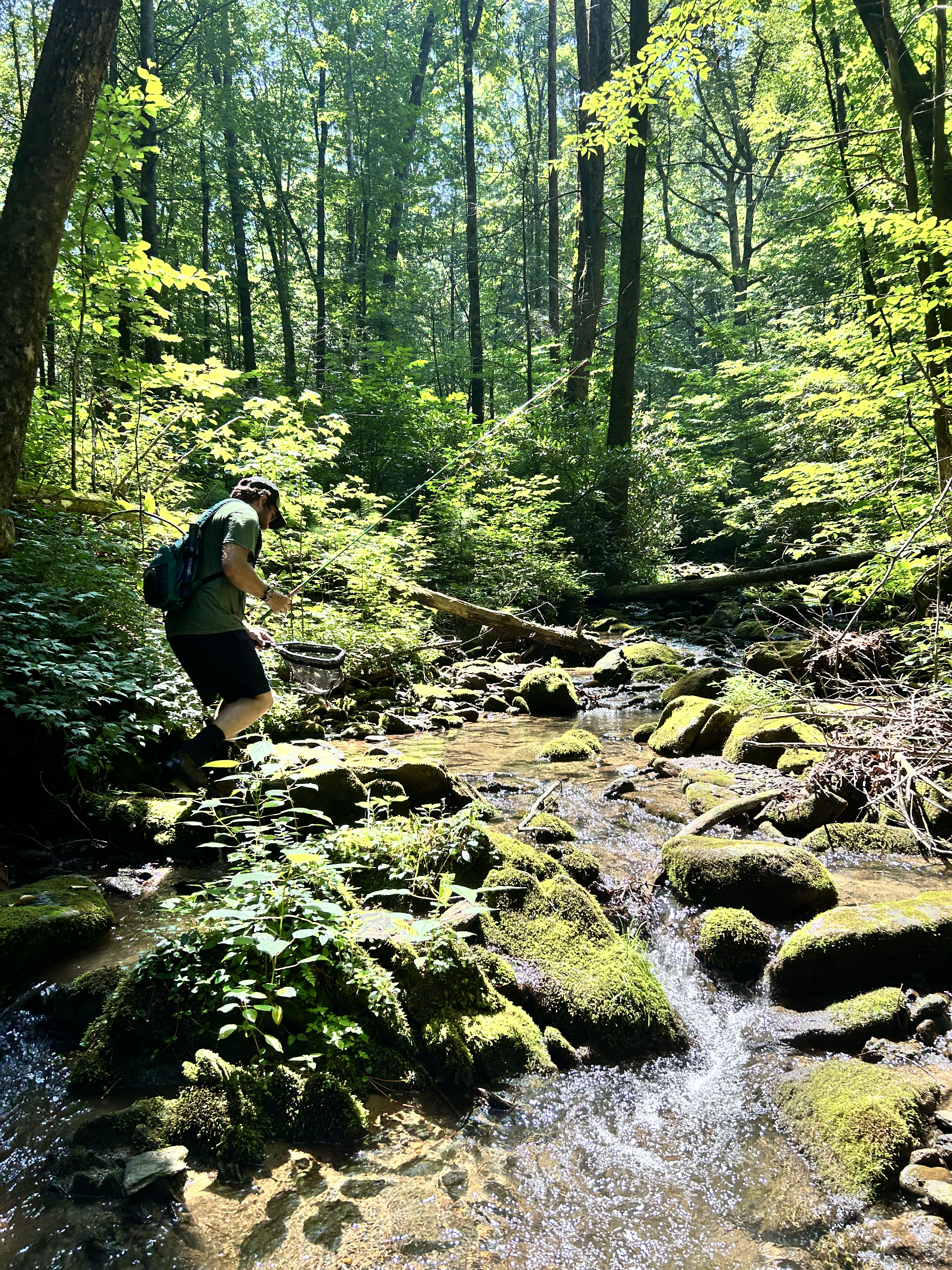
The creek introduces itself before the cabin does. You hear it from the porch and hear it again from the loft, and if you stand on the little sandy beach long enough you will eventually see the reason this field note exists. A small shadow holding in the current, nose upstream, waiting for the water to bring it dinner.
Holly Creek is trout water, and has been for as long as anyone bothered to write these things down. The lower creek, down toward Chatsworth where the road turns back to pavement, gets stocked through the warm months and fishes the way stocked water fishes. Up here at the headwaters the fish are mostly wild rainbows, quick little things colored like the creek bottom they came from, plus the occasional brown that has been making better decisions than its neighbors. Wild fish in small water are a different sport entirely. They spook at a heavy footfall on the bank. They refuse a fly that drags even slightly against the current. A nine-inch wild rainbow is nine inches of pure judgment, and being judged by one is half the fun.
What to bring. A short, light rod is the right tool for water this size, something like a seven-and-a-half-foot three-weight. Longer rods spend the day arguing with rhododendron. A small box of dry flies covers most of the year, and a dry with a little nymph hung beneath it covers the rest. Nothing about this creek requires expensive taste. It requires a quiet approach and a short cast, and a certain peace about losing a few flies to the laurel, which should be understood as rent.
If you are fishing with kids, a spinning rod and a small inline spinner work, and work well. There is no purity test on Holly Creek. A seven-year-old who catches her first trout twenty steps from the porch does not care what it was caught on, and neither does the trout.
The paperwork. Georgia asks for a fishing license and a trout license, both available online through Georgia DNR in about five minutes. The regulations shift now and then, so check the current rules before you rig up. On the property itself we ask that every fish goes back in the creek. Catch and release keeps the wild fish here doing what wild fish do, which is mostly ignoring us. Downstream and in the stocked sections, the state's rules are the rules.
Where to look. Trout in small creeks hold where fast water meets slow. The seam beside the main run. The pocket behind a boulder. The shaded slot where the current digs under the far bank. The tail of a pool at dusk. Skip the flat, shallow stretches, fish anything with depth and shade, and start closer to your feet than pride suggests, because the first cast to a pool is the one the fish believes.
The honest truth about fishing at camp, though, is that the fish are only part of it. Fishing here is a tradition more than a technical pursuit. It is a reason to stand in moving water at seven in the morning with fog still on the creek and coffee going cold on a rock behind you. It is the excuse a father needs to teach a knot. It is a kid turning over stones to find out what trout eat, and coming up with a hellgrammite and a full half hour of entertainment. The creek was running ten thousand years before anyone thought to rate it online, and it will take your measure kindly.
If you come to fish, tell us. We keep current notes on the water and are glad to point you at it. And if the trout refuse you all weekend, the porch has never refused anyone.